


How Does a CO2 Laser Engraving Machine Work?
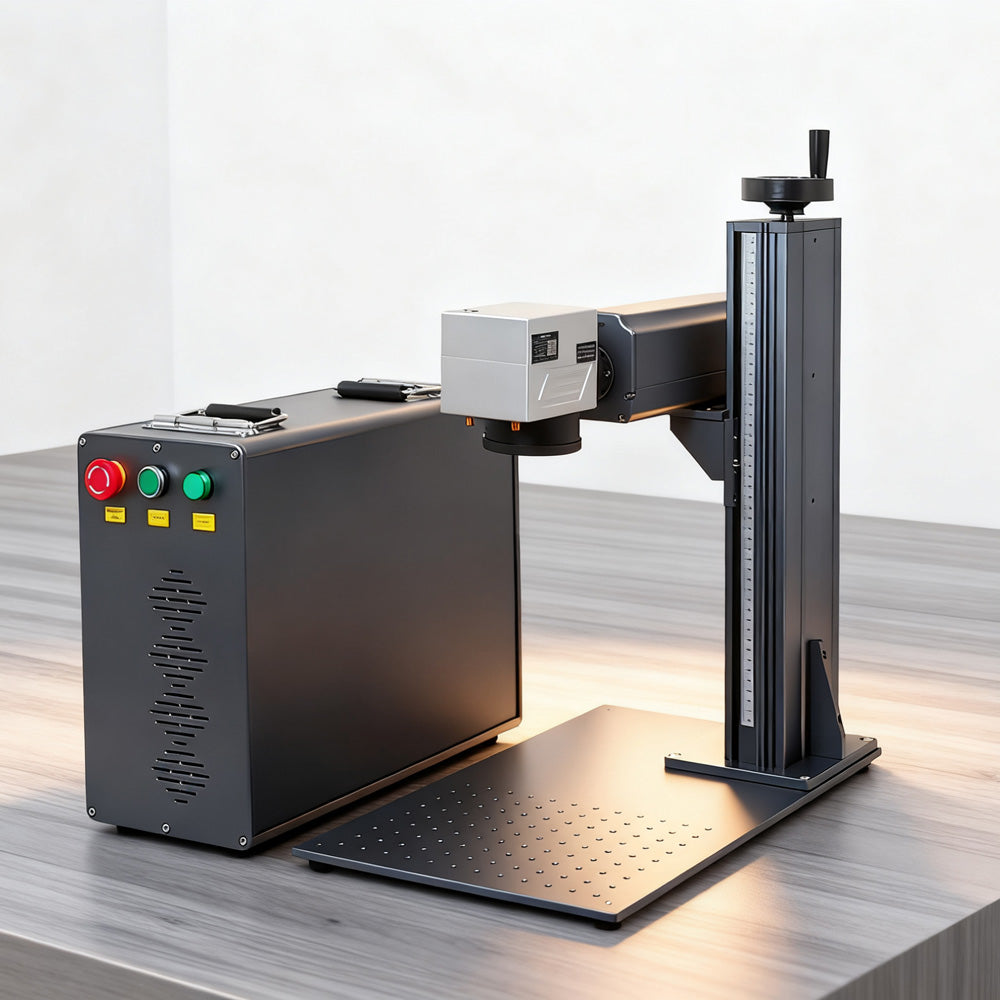
The CO2 laser engraver is designed for fast, non-contact surface marking on non-metal materials. It is widely used by DIY users, small businesses, and product customization shops to create logos, text, barcodes, and patterns.
Working Principle
A CO2 laser engraving machine uses a carbon dioxide (CO2) laser source to generate a precise infrared laser beam. The beam is guided through reflective mirrors or a galvanometer system and then focused by a lens into a small, high-energy spot. When the focused laser interacts with the surface of a material, it creates marks through surface discoloration, micro-etching, or controlled material removal. By adjusting power, speed, and frequency, users can achieve light, dark, or high-contrast markings without damaging the material.

Suitable Materials
CO2 laser engravers are best suited for organic and non-metal materials such as wood, bamboo, leather, rubber, and paper. For metal surfaces, effective marking is only possible when the material has a coating or special treatment, as bare metals are not suitable for direct CO2 laser marking.
Conclusion
CO2 laser engraving machines are popular among users due to their ease of operation, efficiency, and low maintenance requirements. They are ideal for product branding and personalization, making them well-suited for small workshops and home-based applications. With simple setup and user-friendly software, even first-time users can quickly achieve clean, professional marking results.